
websites to make
How to choose, build and grow websites that rank, convert and scale for small businesses.
This practical guide reduces website decisions to clear, actionable steps — from selecting the right site type and content plan, to on-page SEO, traffic strategies and growth tests that actually increase leads. Use these pages as your build checklist.
Choose the right website for your goals
The first decision determines everything else. Pick a site type that matches how you get customers today and how you want to grow tomorrow.
- Key pages: Home, Services, About, Contact, Reviews
- Conversion: Click-to-call, contact form, clear service pricing or starting rates
- Template: Simple, fast, conversion-first layouts
- Key pages: Home, Category, Product, Cart, Checkout, Policies
- Conversion: Fast checkout, trust signals, live chat or clear returns policy
- Template: Product-first, mobile checkout optimised
- Key pages: Home, Portfolio, Services, Case studies, Contact
- Conversion: Case studies with outcomes and clear CTA to book a meeting
- Template: Image-first, lightweight galleries, lazy-loading
Quick rule: pick the simplest site that achieves your goal. Complexity increases cost, maintenance and load time.
SEO essentials (do these first)
SEO isn't magic. Focus on a handful of high-impact activities that improve visibility quickly.
1. Keyword focus: pick 3 core search intents
Identify 1 primary phrase (high intent, e.g. "plumber emergency call"), 1 service page phrase, and 1 brand phrase. Use them in title, H1 and first paragraph.
2. Page-by-page on-page SEO
- Title tag — unique, include primary phrase, 50–60 characters
- Meta description — persuasive summary, 120–155 characters
- H1 — each page needs 1 clear H1 with the target phrase
- URL — short, readable, include keyword (no stop words)
- Alt text — descriptive alt text for all images
3. Technical basics
4. Content depth
Priority pages should be 600–1,500 words with real, useful answers. Use questions, FAQs and short how-to sections to capture featured snippets.
5. Link signals
Start with listings and citations (directories, review sites). Earn one or two relevant links from partners, suppliers or local news to kick-start authority.
Content plan: what to write and where
Short, benefit-driven headline, 3–5 service bullets, trust signals (testimonials, awards), and a single primary CTA (call or contact).
Each major service needs its own page targeting a specific keyword and answering FAQs specific to that service.
3–5 short case studies with before/after outcomes, photos and a clear result (time saved, money earned, etc.) — social proof converts.
Use the blog to capture informational searches (how-to, comparisons). Prioritise topics that feed into your services and solve common customer questions.
Content creation checklist
- Write clear headlines and scannable sections (H2/H3).
- Include 1–2 internal links to service pages.
- Add one CTA above the fold and one at the bottom.
- Use 2–5 images per main page, compressed with descriptive alt text.
Marketing & traffic strategies that work
Use targeted search campaigns for high-intent queries. Start small, optimise for cost per lead, and use location or service-based ad groups to keep relevance high.
Scale focused content (topic clusters) and optimise service pages. Combine long-form guides with local citation work to grow visibility consistently.
Use short educational video or testimonial ads to warm audiences, then retarget visitors who viewed pages but did not convert.
Build simple referral agreements with complementary businesses — offer discounts and track leads with unique landing pages.
Capture emails with a clear value exchange (discount, checklist) and use a 7-email onboarding sequence to convert leads into bookings.
Step-by-step build checklist (actionable)
- Decide site type & goal — conversion, ecommerce, portfolio.
- Pick 3 target keywords — primary (commercial), secondary (service), brand.
- Assemble content — homepage headline, 3 service descriptions, 3 testimonials, 6 images.
- Choose a template or starter layout — mobile-first, fast, conversion-oriented.
- Implement on-page SEO — titles, meta, H1, alt text, structured data.
- Connect analytics & tracking — Google Analytics 4, Google Search Console, conversion tags.
- Test key flows — submit form, call tracking, checkout, mobile experience.
- Launch & announce — add a short launch email, update social profiles, run a small ad test.
- All CTAs work (call links, form submissions).
- Mobile navigation is clear and buttons are tappable.
- PageSpeed mobile score is acceptable (aim 80+).
- Structured data present on service pages.
- Sitemap submitted to Google Search Console.
Measure, test and grow
Data-driven growth is the simplest, lowest-risk way to increase revenue from your website.
Google Analytics 4, Search Console, and conversion tracking (form completion, calls, purchases). Tag events consistently.
Examples: Monthly qualified leads, conversion rate, cost per lead. Use these to prioritise tests.
A/B test headline, CTA colour, or hero image. Small lifts compound — a 10% conversion gain doubles leads over time when traffic is stable.
Identify top 20% of pages by traffic and improve CTAs and content. These pages deliver the majority of conversions.
Ongoing maintenance & update workflow
Check analytics for major drops, ensure backups are running, confirm contact forms are working.
Publish one blog or resource update, review speed metrics, update any promotions or pricing.
Audit SEO, refresh top-performing pages, renew or replace outdated testimonials, review security patches.
If updates cost you hourly fees, plan ahead — a managed subscription that includes unlimited updates often pays for itself in saved time and faster growth.
Frequently asked questions
How long does it take to build a conversion-focused site?
Will my site rank if I use a template?
What should I prioritise first: SEO or ads?
How much content is enough?
Ready to build a website that works?
If you prefer to skip the technical work and launch fast with SEO and conversion best practices already applied, consider a managed build. You can start with a demo and have a live sample site in under a minute.
No location-specific offers. Use the demo to evaluate speed, design and SEO setup before committing.
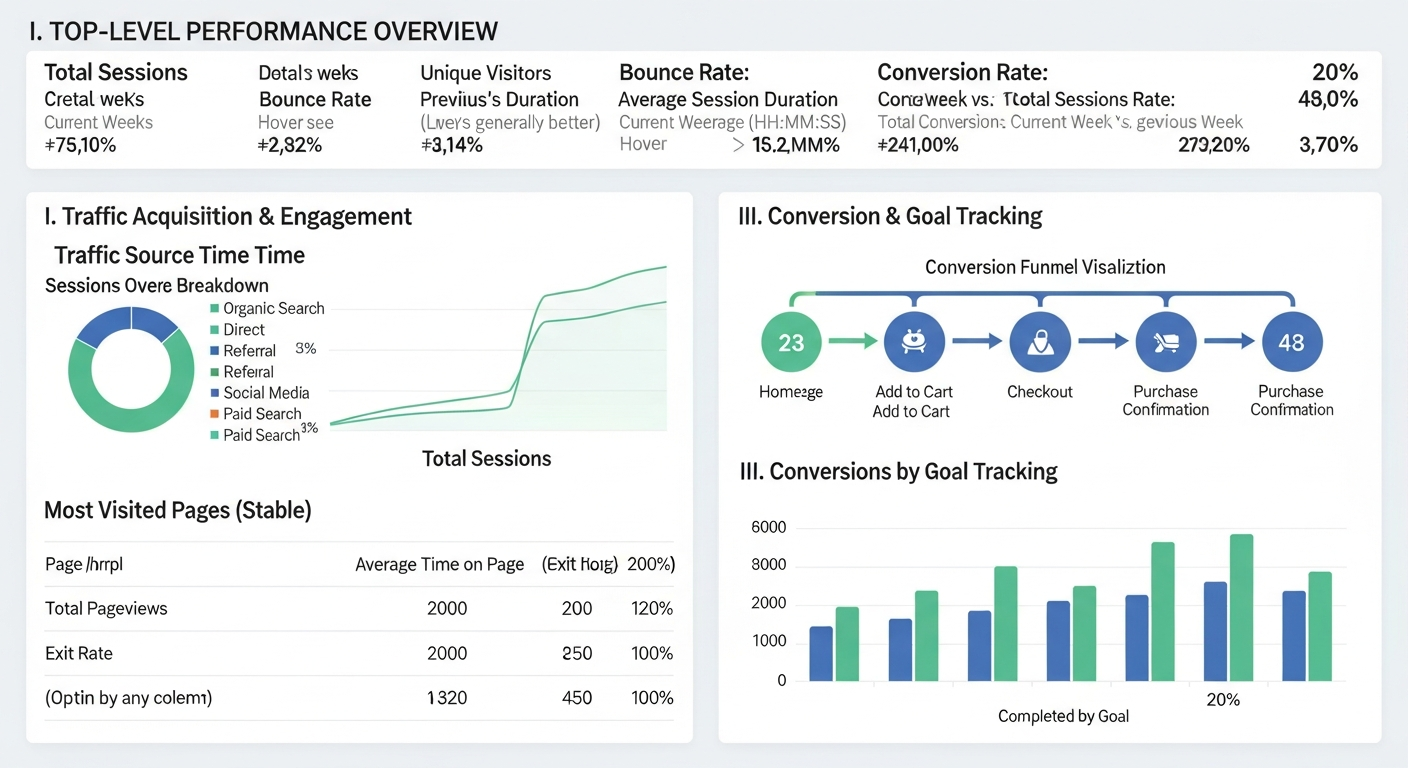
Measure what matters
Track only a few key metrics: monthly leads, conversion rate, traffic by channel, and average order value. Keep dashboards simple and act on trends, not noise.
This guide is designed to be actionable. Save it as your build checklist and revisit the analytics and experiment sections every month.
© Congero 2025 — Practical website guidance for busy small businesses.
