website design companies australia
Why a powerful, conversion-focused online presence is non-negotiable for design firms in Australia — attract higher-value clients, win local search, and show work that converts.
In 2025 your website is your portfolio, sales team and first impression all in one. Learn practical strategies for improving SEO, showcasing work, and converting visitors into enquiries — built for Australian design agencies.
Why a strong online presence is essential for website design companies in Australia
As a web design company you sell trust, creativity and results — all of which must be visible before a prospect picks up the phone. Your website is the most important salesperson: it showcases your work, explains your process, and proves you can deliver measurable outcomes. The right site reduces friction, shortens sales cycles, and attracts higher-value projects.
Three reasons it matters right now
- Clients judge you online first: 75% of decision-makers visit your website before contacting a design company.
- Local SEO drives quality leads: Australians search for "web design near me" and expect to find local, relevant portfolios.
- Portfolio clarity increases conversions: Case studies with measurable outcomes win projects — not aesthetic-only galleries.
If your website looks dated, loads slowly or hides case studies behind menus, you are losing clients to competitors who invest in performance, clarity and SEO.

How SEO and local search attract your best clients
Ranking for the right keywords and owning local map real estate turns casual searchers into qualified leads. SEO for web design agencies is tactical — focusing on services, locations and case studies that match buyer intent.
Local landing pages
Create pages for suburbs and cities you serve (e.g., Sydney web design). Local pages increase relevance for "near me" and city-specific searches.
Keyword-driven case studies
Each case study targets a service + outcome keyword (e.g., "ecommerce web design Brisbane"), giving you high-intent organic traffic.
Structured data & schema
Implement schema for reviews (if used), services, breadcrumbs and portfolios to improve SERP visibility and click-through rates.
SEO checklist for web design companies
- Service pages for each offering (e.g., "WordPress development Sydney")
- City/suburb landing pages targeting local intent
- Case studies with metrics (traffic, conversion uplift, revenue)
- Fast mobile-first site and AMP where appropriate
- Google Business Profile optimisation with service categories
- Backlink strategy: guest posts, local partnerships, supplier pages
Showcase work that wins projects — the portfolio playbook
A beautiful gallery is table stakes. To convert leads into paying clients, structure portfolio content around problems solved, process and measurable results.
Case study layout that converts
- Problem: What challenge did the client face?
- Approach: Your process and solutions (wireframes, UX changes).
- Outcome: Concrete metrics (conversion rate, revenue, load time improvements).
- What you can expect: Timeline, scope and next steps.
Multimedia and storytelling
Include before/after screenshots, short video walkthroughs, and downloadable one-page summaries clients can share with stakeholders.
Filterable portfolio
Allow prospects to filter by industry, platform, project type and outcome — this reduces friction and surfaces relevant work quickly.
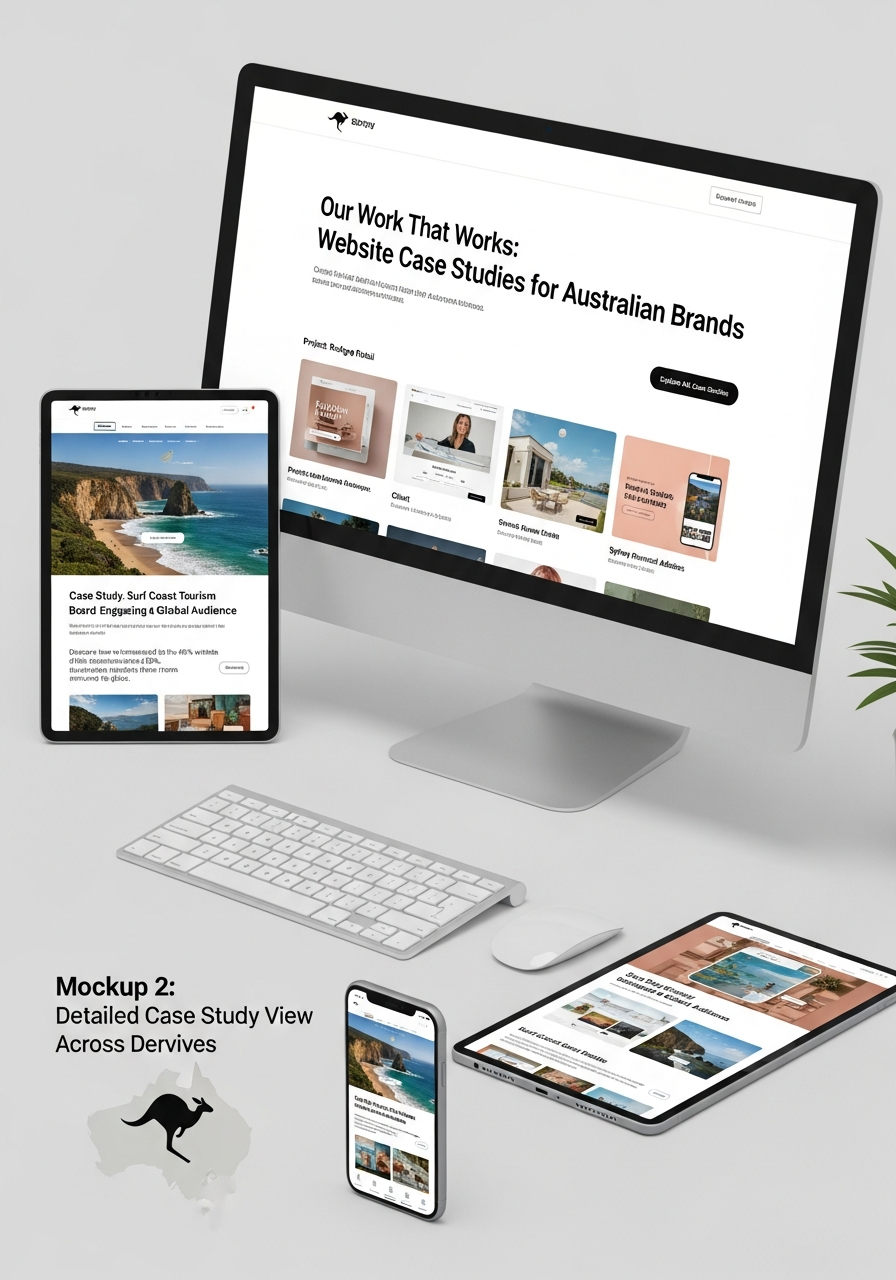
Turn visitors into higher-value clients
Design firms often attract many browsers but few high-value enquiries. The difference is a frictionless, trust-building buyer journey tailored to agency sales cycles.
Targeted messaging
Copy that speaks to decision-makers: product owners, marketing managers and business owners — not designers.
Clear pricing cues
Transparent packages, starting prices, or "typical project ranges" reduce time-wasters and attract serious leads.
Fast contact options
Click-to-call, calendar booking, and quote forms with prequalifying questions help you prioritise high-value prospects.
Sales enablement for agencies
Provide downloadable pitch decks, capability statements and tailored proposals linked from case studies so prospects can present your work internally and move faster toward procurement.
Technical must-haves for agency websites in 2025
Performance & hosting
- Fast CDN-backed hosting (target TTFB <200ms)
- Image optimisation (AVIF/WebP), lazy loading and critical CSS
- Automated backups and staging environments
Security & reliability
- HTTPS enforced with modern TLS
- WAF and DDoS protection for public-facing client demos
- Uptime monitoring and fast incident response
Developer & client tooling
- Staging links for client review and sign-off
- CMS that allows non-technical edits and portfolio updates
- Automated analytics dashboards and conversion tracking
SEO & accessibility
- Semantic HTML, accessible patterns and WCAG basics
- Server-side rendering for crawlability where needed
- XML sitemaps, canonical tags and robot rules
Agency-friendly options: subscription vs. custom builds
Subscription (fast start)
Monthly plan that includes hosting, unlimited small updates and built-in SEO. Ideal for agencies that want a managed, low-overhead client site option.
- Zero upfront design fee
- Live in 24-72 hours
- Easy client handover and CMS access
Custom build (full ownership)
Bespoke projects with full control, unique integrations and advanced performance tuning. Best for high-end clients and complex systems.
- Fixed project scope and timeline
- Staging, QA and dedicated support window
- Option to retain hosting or migrate
White-label partner model
Resell managed websites under your brand, with a partner portal, client links and co-branded case studies. Great for agencies wanting recurring revenue without ops overhead.
- Co-branding and lead routing
- Recurring revenue split options
- Performance reporting for your clients
